
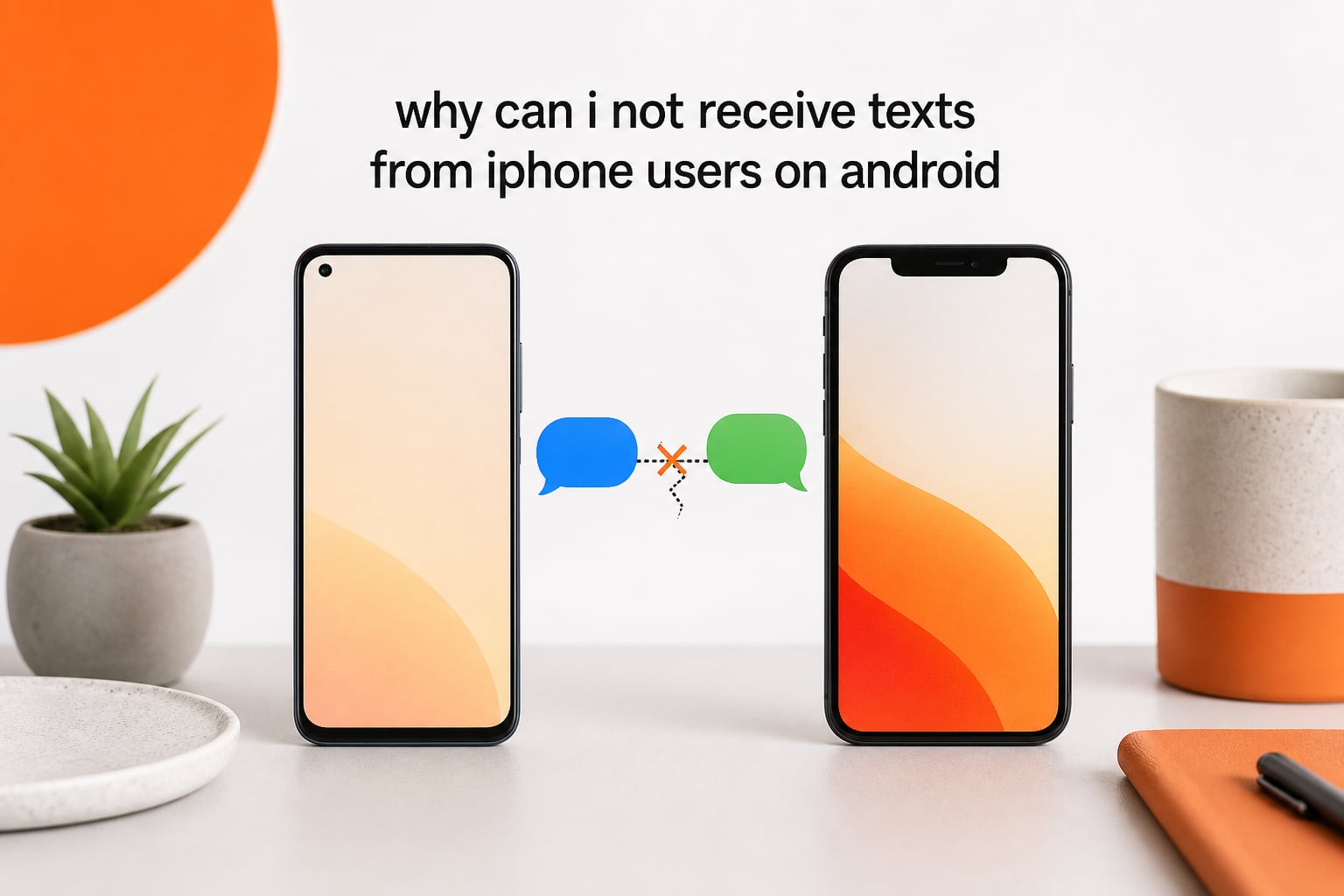
You switched to Android, and suddenly your iPhone-using friends have gone silent. No texts, no group chat replies, nothing. You are probably asking yourself: why can I not receive texts from iPhone users on Android?
The short answer is Apple’s iMessage. When your phone number is still registered with iMessage, Apple’s servers try to send messages through iMessage instead of standard SMS. Since Android devices cannot receive iMessages, those texts simply disappear into the void.
This is one of the most frustrating cross-platform messaging issues out there. The sender sees a “Delivered” badge on their end, but you never actually receive anything. Our team has helped dozens of readers resolve this exact problem, and in nearly every case, the fix comes down to deregistering your number from iMessage.
In this guide, we will walk you through exactly why this happens, how to deregister your phone number from iMessage using Apple’s official tool, and what additional steps to try if the problem persists. Let’s get your texts flowing again.
Table of Contents
Why iMessage Causes This Issue
To understand why you cannot receive texts from iPhone users, you need to understand how iMessage works behind the scenes.
Apple’s iMessage is a proprietary messaging service that routes texts through Apple’s own servers instead of your carrier’s SMS infrastructure. When an iPhone user opens their Messages app and types your number, Apple checks whether that number is registered with iMessage. If it is, the message gets sent as an iMessage.
This is where the problem starts for Android users.
Blue Bubble vs Green Bubble: What It Means
On an iPhone, messages sent through iMessage appear in a blue bubble. Messages sent through traditional SMS appear in a green bubble. The iPhone user’s device automatically decides which method to use based on whether the recipient is registered with iMessage.
If your phone number is stuck in Apple’s iMessage system, every iPhone user who texts you sees a blue bubble. Their iPhone believes you are another Apple device. The message goes to Apple’s servers, Apple tries to deliver it as an iMessage, and because you are on Android, it never arrives.
Why the Sender Sees “Delivered”
Here is the part that makes this issue so maddening. The iPhone sender often sees a “Delivered” notification under their message. This is because Apple’s iMessage system reports successful delivery to Apple’s servers, not to your actual device.
Apple’s system registers that the message was accepted by its own infrastructure. Your Android phone never receives anything, and neither you nor the sender gets an error message on your respective ends. The text simply vanishes.
This silent failure is why so many people go weeks or even months without realizing they are missing messages from iPhone contacts.
Common Scenarios That Trigger This Problem
Not everyone experiences this issue the same way. Here are the most common situations that cause your number to get trapped in iMessage limbo.
You Recently Switched From iPhone to Android
This is by far the most common trigger. If you used an iPhone with iMessage enabled and then switched to an Android phone without properly signing out of iMessage first, your phone number is still registered in Apple’s system.
Apple has no way of knowing you left unless you tell them. Every iPhone user who texts your number will have their messages routed through iMessage by default.
You Got a Recycled Phone Number
Phone numbers get recycled. If your current number previously belonged to an iPhone user who had iMessage enabled, that number may still be in Apple’s database.
You might never have owned an iPhone in your life, but Apple’s system still thinks your number belongs to one. This scenario is surprisingly common and catches many people off guard.
Group Chat Issues With Mixed Devices
Group messages are especially vulnerable. If even one person in a group chat has iMessage routing issues, the entire thread can break down for Android participants.
Some users report receiving certain messages from a group chat but missing others entirely, depending on which iPhone user initiated that particular message.
How to Deregister Your Number From iMessage
Deregistering your phone number from iMessage is the single most effective fix for this problem. Apple provides two methods to do this, and we recommend trying both if the first one does not work immediately.
Method 1: Use Apple’s Official Deregistration Tool (No iPhone Needed)
If you no longer have your old iPhone, or if you never owned one, this is the method for you. Apple has set up a dedicated web page for exactly this situation.
Step 1: Open your web browser on any device and go to Apple’s official iMessage deregistration page at selfsolve.apple.com/deregister-imessage.
Step 2: Enter your phone number in the field provided. Make sure to include the correct country code.
Step 3: Apple will send a confirmation code to your phone via SMS. Enter that code on the website to verify you are the owner of the number.
Step 4: Once verified, Apple will remove your number from the iMessage registry. This tells Apple’s servers to stop routing messages to your number through iMessage.
Step 5: Wait for the process to complete. In most cases, deregistration takes effect within a few hours, but it can occasionally take up to 24 hours.
Method 2: Deregister Using Your Old iPhone
If you still have your old iPhone and it can connect to Wi-Fi, you can deregister directly from the device.
Step 1: Insert your SIM card back into the old iPhone and connect it to Wi-Fi. The SIM does not need active cell service, but it should be the same number.
Step 2: Open Settings on the iPhone.
Step 3: Scroll down and tap Messages.
Step 4: Toggle iMessage to the off position. The switch should turn gray.
Step 5: Go back to Settings, tap FaceTime, and toggle that off as well. FaceTime also links to your phone number through Apple’s servers.
Step 6: Wait a few minutes, then have an iPhone-using friend send you a test text. Their message bubble should appear green instead of blue, confirming that iMessage is no longer intercepting your texts.
What to Expect After Deregistration
Once Apple processes your deregistration request, any iPhone user who sends you a message will automatically fall back to standard SMS. Their blue bubble will turn green, and the text will route through your carrier’s network like any normal message.
Keep in mind that Apple’s servers need time to propagate the change. If you try a test message immediately after deregistering and it still does not come through, give it a few more hours and try again.
Additional Troubleshooting Solutions
If you have already deregistered from iMessage and are still not receiving texts from iPhone users, try these additional fixes in order. They address the less common but still frequent causes of cross-platform messaging failures.
Step 1: Restart Your Android Phone
It sounds basic, but a simple restart clears temporary software glitches and refreshes your phone’s connection to the cellular network. Power your device off completely, wait about 30 seconds, and turn it back on.
After the reboot, ask an iPhone friend to send a test message. This alone resolves the issue for a surprising number of users.
Step 2: Check Your Cellular and Mobile Data Connection
SMS messages require a cellular voice connection, and MMS messages (which include photos and group texts) require mobile data. If your mobile data is turned off, you may receive plain SMS but miss MMS messages entirely.
Go to Settings > Network and Internet (or Connections on Samsung devices) and verify that Mobile Data is turned on.
Also check your signal strength. If you are in an area with poor coverage, messages may be delayed or fail to arrive altogether.
Step 3: Verify Your SMS and MMS Settings
Your Android messaging app needs the correct configuration to receive cross-platform messages. Open your default messaging app, tap the three-dot menu, and go to Settings.
Look for the following options and make sure they are enabled:
SMS: Ensure your SMS service center number is correct. This is usually configured automatically by your carrier, but it can occasionally get corrupted.
MMS: Make sure Auto-download MMS is turned on. If this is disabled, you will not receive picture messages or group texts from iPhone users.
Access Point Names (APN): Go to Settings > Network > Access Point Names and verify that the correct APN for your carrier is selected. Incorrect APN settings are a frequent cause of MMS delivery failures.
Step 4: Check Your Blocked Contacts List
It is possible that the iPhone user trying to text you has been accidentally blocked on your Android device. This happens more often than you might think, especially if you carry over blocked numbers from a previous phone.
Open your Phone app, tap the three-dot menu, and select Settings > Blocked numbers. Review the list and remove any numbers that should not be there.
Also check inside your Messages app settings for a separate blocked contacts list, as some Android phones maintain two different block lists.
Step 5: Clear Your Messaging App Cache
Over time, your messaging app’s cache can accumulate corrupted data that interferes with message delivery. Clearing it forces the app to rebuild fresh data.
Go to Settings > Apps > Messages (or your default SMS app). Tap Storage and then tap Clear Cache.
Do not tap “Clear Data” unless you are prepared to re-enter your messaging app settings, as this will reset all your preferences.
Step 6: Update Your Android System and Messaging App
Software bugs are a frequent cause of messaging issues. Outdated system software or an old version of your messaging app can break SMS and MMS functionality.
Check for system updates by going to Settings > System > System update. Install any available updates.
Then open the Google Play Store, search for your messaging app, and install any pending updates.
Step 7: Reset Your Network Settings
If none of the above steps have worked, resetting your network settings can resolve deep configuration issues. This will erase your saved Wi-Fi passwords, Bluetooth pairings, and cellular settings, so you will need to set those up again afterward.
Go to Settings > System > Reset options > Reset Wi-Fi, mobile, and Bluetooth. Confirm the reset and wait for your phone to restart.
After the reboot, your phone will re-register with your carrier’s network with fresh settings. This often resolves stubborn SMS and MMS problems that other fixes cannot.
Step 8: Toggle Airplane Mode
As a quick last resort, toggle Airplane Mode on for about 30 seconds and then turn it back off. This forces your phone to reconnect to the nearest cell tower and can clear minor network registration issues that block incoming messages.
Group Messaging Issues Between iPhone and Android
Group chats involving both iPhone and Android users are particularly fragile. The mixed-device dynamics introduce several failure points that do not exist in one-on-one conversations.
Why Group Texts Break
When an iPhone user starts a group message and all participants are iPhone users, the conversation runs entirely through iMessage. If an Android user is added to the mix, the iPhone is supposed to fall back to group MMS.
However, this fallback does not always work smoothly. If the iPhone initiator has iMessage issues with even one Android participant, the entire group thread can fail for that person.
RCS Messaging and the 2026 Landscape
RCS (Rich Communication Services) is the modern messaging standard that brings iMessage-like features to Android, including read receipts, typing indicators, and high-quality media sharing. Google Messages uses RCS by default on most modern Android phones.
With Apple’s recent adoption of RCS support in iOS 18 and later, the messaging gap between platforms has narrowed. However, RCS interoperability is not perfect. Some users in 2026 still report message delivery issues in mixed RCS environments, particularly when group chats involve older iPhones that lack RCS support.
If RCS is causing issues, you can try temporarily disabling it in Google Messages settings to force a fallback to standard MMS for group conversations.
When to Contact Your Carrier
If you have deregistered from iMessage, tried every troubleshooting step above, and still cannot receive texts from iPhone users, the issue may be on your carrier’s end.
Contact your carrier’s technical support line and ask specifically about SMS and MMS provisioning on your account. Sometimes phone numbers are not properly provisioned for cross-carrier SMS when activating a new SIM card or porting a number.
Ask the support agent to check whether your line has any message-blocking features enabled. Some carriers enable premium SMS blocking by default, which can inadvertently block legitimate messages from certain shortcodes or routing systems.
If you recently ported your number from one carrier to another, provisioning issues are especially common. Your new carrier may need to manually refresh your SMS registration on their network.
FAQs
Why can’t I receive texts from iPhone users on my Android?
You cannot receive texts from iPhone users because your phone number is still registered with Apple’s iMessage service. When iPhone users text you, Apple’s servers attempt to deliver the message through iMessage instead of standard SMS. Since Android devices cannot receive iMessages, the texts never arrive. Deregistering your number using Apple’s official tool at selfsolve.apple.com/deregister-imessage resolves this in most cases.
How do I fix Android not receiving texts from iPhone?
Start by deregistering your phone number from iMessage at selfsolve.apple.com. Then restart your Android phone, verify mobile data is enabled, check SMS and MMS settings, clear your messaging app cache, update your system software, and reset network settings if needed. If none of these work, contact your carrier to check SMS provisioning on your account.
How do I deregister my number from iMessage?
Visit Apple’s official deregistration page at selfsolve.apple.com/deregister-imessage. Enter your phone number, confirm the verification code sent via SMS, and Apple will remove your number from the iMessage registry. If you still have your old iPhone, you can also go to Settings u0026gt; Messages and toggle iMessage off.
Why are iPhone messages not delivered to Android?
iPhone messages fail to reach Android devices when the recipient’s phone number is registered with iMessage. Apple’s servers route the message through iMessage instead of SMS, and the sender sees a ‘Delivered’ status even though the Android device never receives the message. This happens most often when someone switches from iPhone to Android without deregistering their number.
How long does it take for iMessage deregistration to work?
Apple’s iMessage deregistration typically takes effect within a few hours, but it can occasionally take up to 24 hours for the change to fully propagate across Apple’s servers. If messages still are not coming through after 24 hours, try the additional troubleshooting steps or contact your carrier.
Conclusion
Figuring out why you cannot receive texts from iPhone users on Android can feel like chasing a ghost, but the root cause almost always traces back to iMessage. Your phone number gets trapped in Apple’s system, and messages that should arrive as SMS are silently swallowed by iMessage routing.
The fix starts with deregistering your number at Apple’s official tool at selfsolve.apple.com. For most users, this single step resolves the problem within hours. If it does not, the additional troubleshooting steps above cover every other common cause, from mobile data settings to carrier provisioning issues.
Do not let Apple’s messaging ecosystem hold your texts hostage. Run through these steps, be patient with the propagation time, and you should be back to receiving messages from all your iPhone contacts before long.